

Why Every Child Should Experience Music Education at an Early Age
Why Every Child Should Experience Music Education at an Early Age
Manoj Kumar
September 24, 2026
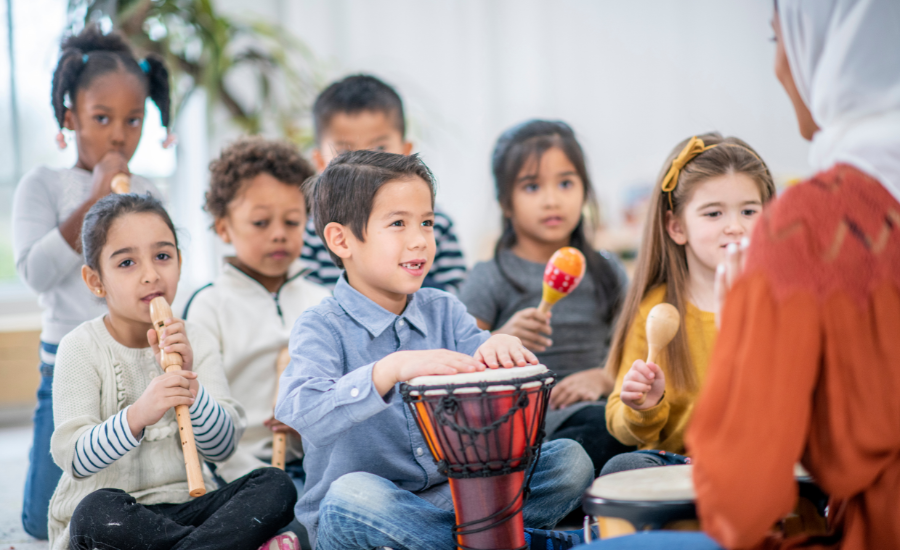
What happens when a child learns to play a musical instrument?
They don’t just learn notes.
They learn to listen, concentrate, practise, express emotions, solve problems and perform with confidence.
Music education can become much more than an after-school activity. When introduced at an early age, it can become a creative space where children discover their abilities while having fun.
🎧 1. Music Trains Children to Listen
Before children learn to play, they learn to listen.
Recognising rhythm, pitch, tempo and changes in sound encourages children to pay attention to details. These listening skills can also become useful when they communicate, follow instructions and participate in group activities.
🧠 2. It Makes Learning More Engaging
Have you noticed how quickly children become interested when learning feels like play?
Music combines sounds, movement, repetition and creativity. Whether a child is learning guitar, keyboard, drums or violin, lessons can turn practice into an enjoyable learning experience.
Instead of simply memorising information, children actively participate.
🎹 3. Learning an Instrument Teaches Patience
A child rarely plays a song perfectly on the first attempt—and that’s actually a good thing.
Learning an instrument teaches children that improvement takes time.
First attempt → Practice → Small improvement → More practice → Confidence
This simple cycle can help children understand the value of persistence and consistent effort.
🥁 4. Music Encourages Creativity
Music gives children an opportunity to experiment.
They can explore different sounds, rhythms and melodies. As their skills develop, they can eventually begin creating their own musical ideas.
This freedom to experiment can encourage children to think creatively rather than always looking for one “correct” answer.
🎤 5. It Can Build Performance Confidence
Performing in front of parents, teachers or classmates can feel intimidating at first.
But every small performance can become a confidence-building experience.
A child who learns to stand on stage, remember a piece and complete a performance can gradually become more comfortable expressing themselves in front of others.
👥 6. Music Can Teach Teamwork
Music doesn’t always happen alone.
Group classes, ensembles and performances teach children how to listen to others, maintain rhythm and contribute to a shared performance.
One child may play the drums while another plays guitar or violin. Everyone has a role—and everyone needs to work together.
❤️ 7. Most Importantly, It Should Be Fun
Perhaps the biggest question isn’t:
“How quickly can my child become an excellent musician?”
It’s:
“Does my child enjoy making music?”
Children are more likely to stay engaged when lessons match their age, interests and learning style. A supportive teacher can make the process enjoyable while gradually introducing discipline and technique.
🎶 When Should Your Child Start?
There is no single “perfect” age for every child.
Some children may show interest in music very early, while others may become curious later. What matters is creating an opportunity to explore music without making it feel like a compulsory academic subject.
For parents looking for music classes in Mumbai, consider the teaching approach, class environment, instrument options and opportunities for children to practise and perform.
🌟 A Small Musical Beginning Can Go a Long Way
Your child doesn’t have to become a professional musician.
They might simply discover a favourite instrument.
They might make new friends.
They might become more confident.
Or they might discover a lifelong love for music.
And sometimes, that’s the real value of music education—not creating the next superstar, but giving a child a creative skill they can carry with them for life. 🎵
Have Any Question?
Learn guitar, keyboard, vocals, drums and music production with expert trainers today.
- +91-87776 29296
- deyzmusic5@gmail.com